Monday, August 4, 2014

More Summer Reading Book Reviews

I am constitutionally unable to stop writing book reviews, as I explained to my writing group recently.  My mother kept a small book where she wrote brief reviews of the books she read.  Just for herself, she said, so she could remember what she read.  I brought her Book Notes home with me a couple months ago because she looked at it and had no idea what it was or who wrote it, and I was afraid she would throw it away.  My husband and I customized the small notebook for her years ago.  Ricky used his old mechanical drawing equipment to label the cover and make alphabetical tabs for the pages. 

Mother's book review notebook
 While I don’t write reviews of every book I read, I have a hard time giving a book away until I duly acknowledge reading it via some sort of review.  Books don’t have to be great literature to entertain me—I guess that harkens back to my Nancy Drew days.  I’ve always analyzed and critiqued things.  When I was in middle school, I helped edit a church youth newsletter one summer.  I found samples of my articles once, and saw I reviewed books, movies, and horse shows with equal aplomb!

Thus, the following are a few of the light mysteries I’ve recently read.  I want to give these books away but can’t until I review them!

 
The Rocky Road to Romance
Janet Evanovich
(HarperTorch, 2004; originally published in 1991) 

Before her highly popular Stephanie Plum bounty hunter mystery series (Top Secret Twenty-One being the latest offering), Evanovich was a romance author.  I don’t know where I got this book, but I read it quickly one day when I saw it on my shelves.  Daisy Adams has a morning segment on radio station WZZZ featuring recipes for dogs, having written a successful book Bones for Bowser, but one morning she is elevated to the station’s traffic reporter when the regular reporter is injured in an accident with a garbage truck.  Station owner Steve Crow must quickly try to teach her the gist of her new job and finds himself falling in love with the overachieving Daisy.  Daisy is also a doctoral student, delivers newspapers, is caring for a teen-age brother, serves as a crossing guard for school children and volunteers at a nursing home.  When Daisy accidentally helps the police capture a drug king pin, her life is in danger.  Other colorful characters enter the scene, as the story unfolds in Evanovich’s signature humorous and breezy manner.  I can’t help myself.  I like Evanovich.


 The Secret Keeper
Kate Morton
(Atria Books, 2012) 

I’ve had this book for a couple of years but couldn’t make myself read it, though I liked Morton’s The Distant Hours well enough.  Since I’m reading books that I already own right now as part of a personal reading challenge, I pulled this one down to give it another try.  The book was reviewed extensively when it first was published, so I’ll make this brief.  Laurel Nicolson saw something violent and disturbing when she was 16 years old.  Decades later, she wants answers to the mystery surrounding the incident.  Her mother is dying, and Laurel, a famous actress, comes home to be near her mother and her siblings in the farm house where the children enjoyed an idyllic childhood.  Laurel also wants to resolve her own lingering questions and, in turn, uncover her mother’s mysterious past.  The story is told by multiple narrators, as it moves back and forth between the present and war torn London during the World War II blitz.  I found the book to be too long as Laurel laboriously unravels the old mystery, but I did like the surprise twist at the end.

 
The Spice Box
Lou Jane Temple
(Berkley Prime Crime, 2005) 

A historical mystery set in 1860’s New York City features Irish orphan and cook’s helper, Bridget Heaney.  Her first day on the job Bridget makes an unfortunate discovery—her employer’s son is dead and stuffed into a large box that is intended to store dough before the loaves of bread are ready for baking.  Bridget pitches in to help her employer solve the murderer because neither believes that the police are up to the task.  The information about foods prepared and served both upstairs and below stairs in the grand houses of mid-nineteenth century Manhattan is interesting.  The death of the son is resolved but not before others die.  The climax and denouement are satisfactory.  Bridget has a developing friendship with a young Irish reporter who helps her locate the younger sister who she feared was dead.  Author Lou Jane Temple is a chef, food writer and restaurant consultant.


Judgment Call
J.A. Jance
(William Morrow, 2012)
 
Prolific mystery writer J.A. Jance writes several successful series and one I’ve followed off and on features Arizona Sheriff Joanna Brady.  When Joanna’s daughter finds the body of her high school principal, it becomes personal for Brady who must first find out who the principal really was before she can discover who wanted her dead.  The motive for the murder and the manner of discovery of the principal’s whereabouts (despite her efforts to change her name and distance herself from her past) are far-fetched.   However, I like the recurring characters of this series and the western setting, plus Jance’s mysteries don’t drag, so it added up to enjoyable escapist summer reading for me.


Thursday, July 3, 2014

I've Got You Under My Skin, by Mary Higgins Clark

I’ve Got You Under My Skin
Mary Higgins Clark
(Simon & Schuster, 2014)

Author Mary Higgins Clark is dependable—she knows how to  write thrillers.  The characters are interesting, her books are paced well.  I’ve Got You Under My Skin is no exception. 

A rich socialite was murdered 20 years ago and Laurie Moran, a television producer of reality shows, wants to bring all the suspects together again—the grief-stricken husband; the dead woman’s daughter and three of her friends who were celebrating their high school graduation 20 years ago at the home with a large party and a sleepover; the long-time housekeeper; a close family friend; plus an old girlfriend of the husband who also shows up to watch the filming of the TV show.

The show’s producer, Laurie Moran, is no stranger to murder herself.  Her young husband, a physician, was brutally gunned down five years ago while he played in the park with his young son. Then the killer with startling blue eyes looked at the terrified young boy and told him, “Tell your mother she’s next, then it’s your turn.”  Laurie, her son, and her father, an ex-cop, have lived under this threat ever since.

Every person participating in the reality show comes under suspicion for the socialite’s murder as scenes from 20 years ago are staged for the show.  Each person is interviewed by a famous criminal lawyer, and long-buried secrets come to the surface.  While attention is focused on the 20 year old murderer, the notorious “Blue-Eyed Killer” stalks Laurie and her son unnoticed, plotting his final revenge.

The basic premise that people who suffered so much already would allow such an invasion of their privacy by participating in a reenactment TV show seems a little far-fetched to me, but the author explains it satisfactorily.  The police and media made them all suspects 20 years ago, so this represents an opportunity for them to clear their names.  However, it turns out that each person has a good motive for murder of the socialite, and no one has an alibi. 

Although the ultimate outcome is predictable, there are surprises and a few plot twists.  The book goes down easy, making it a good choice for summer reading.
 
Clark's books have sold over 80 million copies.  To read about Mary Higgins Clark's interesting life, visit her website here.


Wednesday, July 2, 2014

The War of Art reviewed

The War of Art
Steven Pressfield
(Grand Central Publishing, 2002)

Pressfield’s small gem of a “self-help” manual is divided into three “books” or sections.  In Book One Pressfield labels the enemy of positive endeavors, whether it is creative act of writing, painting, gardening, or efforts toward getting healthier, as Resistance.  Resistance seeks to prevent us from pursuit of “any act that rejects immediate gratification in favor of long-term growth, health or integrity.”

Resistance seeks “to shove us away, distract us, prevent us from doing our work.”   Resistance is the enemy within, though Resistance often leads us to point our fingers at others, at the circumstances of our lives, in our attempt to cast the blame away from ourselves for failure to pursue our heartfelt dreams. 

Pressfield has a wonderful list of the insidious characteristics of Resistance, then he explains each in the short chapters of Book One.  For example, Resistance is always lying, so we must learn to tune it out.  Resistance isn’t personal, it attacks each individual who seeks betterment without prejudice or favoritism.   Resistance recruits allies, the Resistance in other people.  They who themselves are stuck may unconsciously interfere with another person’s efforts.

Our war with Resistance is a fight to the death, Pressfield maintains.  It is a “take no prisoners” war of art.  Resistance seeks to prevent us from becoming who we are meant to be.

After painting a rather grim picture in Book One, Pressfield informs us in Book Two that Resistance can be defeated—by turning “pro” in attitude.  Show up and do the work.  As Somerset Maugham told someone who asked him if wrote on schedule or only when he felt inspired:  “I write only when inspiration strikes.  Fortunately it strikes every morning at nine o’clock sharp.”  Resistance is a bully, says Pressfield.  When you stand up to a bully, he/she most often backs down.


Book Three personifies the forces that help us combat Resistance.  We can think of them of muses or angels, Pressfield writes.  Angels, or the muses, reside in the Self.  Resistance is in the Ego.  We must do our work for our Selves, our happiness, not for fortune or attention or applause.  

The Universe gets behind us when we make the effort.  Goethe says, “Whatever you can do, or dream you can, begin it.  Boldness has genius, magic and power in it. Begin it now.”  Or as Pressfield states, “The same everyday miracles are happening in all our heads day by day, minute by minute.”

This book was loaned to me by a friend.  So far, I’ve read it twice.  The first time I really was struck by the description of Resistance, an entity I recognized in all its forms.  The second time I read it, the concept of “turning pro” really jumped out at me.  It seemed fairly easy, don’t worry about overcoming each manifestation of Resistance, just show up and make the effort. 

While I haven’t yet made the acquaintance of any muses or angels described in Book Three, I’m sure they are lurking around here somewhere.  In the meantime, I’ll just keep showing up. 


Steven Pressfield is the author of multiple books of  historical fiction, including The Legend of Bagger Vance; various screenplays; and other books of non-fiction.  He is a graduate of Duke University and a former United States Marine.


Saturday, June 28, 2014

Worthy Brown's Daughter


Worthy Brown's Daughter
Phillip Margolin
(HarperCollins, 2014)

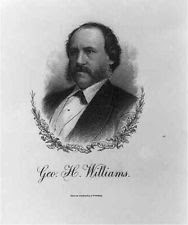
Former attorney and author, Phillip Margolin, was compelled to write Worthy Brown’s Daughter when he read of a court case that took place in the Oregon Territory in 1850’s. A slave family named Holmes was brought to the Oregon Territory by their owner, Colonel Nathaniel Ford, with the understanding that they would work as indentured servants for Ford for a number of years, after which they would be freed.  The Holmes family upheld their part of the bargain but when the time came for Ford to free them, Ford freed the parents and one young child, but kept the family’s other children.  The family found a white lawyer who agreed to represent them and sued Ford for the return of their children.  In 1853 the Oregon Supreme Court Justice, the Honorable George Williams, ruled in the family’s favor but one child had already died in Ford’s care.  Margolin was so moved by this story that he decided to write a historical novel based on this sad situation.


The result is Worthy Brown’s Daughter set in Portland, Oregon in 1860 when Oregon was a new state (having achieved statehood in 1858), and the legal system still had a Wild West quality to it.  Worthy Brown, a freed slave, is faced with a problem similar to the Holmes family.  His former owner, Caleb Barbour, a scoundrel and an unscrupulous lawyer, reneged on his agreement to free both Brown and his young daughter Roxanne if Brown worked as an indentured servant for Barbour. 
 
Worthy Brown meets a young lawyer Matthew Penny, newly arrived in Oregon and still grieving the death of his young wife on the Oregon Trail crossing, and asks Penny to help him free Roxanne from Barbour.  Penny takes the case but complications arise, people die, others fall in love.  Meanwhile, Penny is faced with a moral dilemma that threatens to destroy both himself and Worthy Brown. 
 
Margolin uses compelling characters to tell his story.  Some are lawyers, others are wealthy movers and shakers in the state of Oregon, while some are unsavory individuals drawn to the opportunities in the West.  Occasionally the characters sound a bit “wooden” but it doesn’t detract from the story.  Margolin's experience as a criminal defense attorney adds realism to the legal strategizing and court scenes.

Picture of author Phillip Margolin
(Photo courtesy of Portland Tribune, Jaime Valdez)
 
The plot moves quickly, demonstrating Margolin’s background in suspense.  His prose is terse and to the point, befitting one in the legal profession.  The reader also gets a historical perspective of Portland during this time period.  In the author’s notes, he indicates when he has taken liberties with dates of actual events. 
 
My niece gave me this book, and it turned out to be enjoyable summertime reading.  Thanks, Carrie!

Tuesday, June 24, 2014

Reading Mediocre Books

I don’t know why I read mediocre books, but lately I’ve read several.  For the most part they weren’t terrible, or at least they had some redeeming characteristics, or I wouldn’t have finished them.  In some instances I read them because I had purchased them, albeit on sale, and wanted to get my money’s worth. 

“What about your time?” a voice inside my head asks insistently. Another small voice whispers seductively, “You see what gets published, you can do as well.”  The discussion continues ad nauseam as I critique the books in my head.

 
A Talent for Murder
R.T. Jordan
(Kensington Books, 2009)
Purchased on sale, this book got my attention because the protagonist, Polly Pepper, is an older actress and an amateur sleuth who is the “nice” judge on a reality show, “I’d Do Anything to Become Famous.”  Other than Polly Pepper having a flamboyant personality and life style that was somewhat amusing, the book had few redeeming characteristics.  The answer to the question of what people would do to become famous turns out to be have sex with anyone, no matter what their gender, and to kill each other.  Perhaps the author, a publicist at Walt Disney Studios, was trying to show the absurdity of television reality shows and the depths to which people who produce and appear on them have sunk, but it didn’t work for me.  I was left wondering why I had read the book.


The Devil's Puzzle
Clare O'Donohue
(Plume/Penguin Publishing Group, 2011)
The Devil’s Puzzle is part of a series featuring Nell Fitzgerald who helps her grandmother run a quilting store in the small town of Archer’s Rest.  The events in this book take place during the preparations for the big Fourth of July celebration when a skeleton is found in the yard of Nell’s grandmother.  Everyone in town is a suspect as old secrets and former relationships surface, creating lots of red herrings.  There is nothing wrong with this mystery, but it didn’t really engage me—not the characters, the setting, the milieu, nor the plot—but I did complete it to see “who done it.”  Another reader might like this book better.  At least it is suitable for sharing with my older friend down the street who likes mysteries and sewing.


Double Shot
Diane Mott Davidson
(William Morrow, 2004)
I picked this up on sale because I used to read this cozy series by Diane Mott Davidson and enjoyed the capers of the caterer, Goldy Schultz, and her friends.  Dead bodies turn up in the course of their catering jobs, and Goldy solves the mystery and cooks a lot.  I like the cooking part and the setting in Colorado, but nothing else works in this mystery.  Goldy’s abusive ex-husband is murdered, and the reactions of the characters are unbelievable, especially Goldy’s teen-age son who is devastated despite knowing how his father treated his mother, other women and people in general.  The father was totally immoral, and the reader is supposed to believe a teen-age boy would have no concern or awareness of this fact, nor exhibit any ambivalence about his father.  The ending is equally absurd.  This is a book that must have been written on deadline with no one much caring about the content.
 

Christmas Carol Murder
Leslie Meier
(Kensington Books, 2013) 
Loaned to me by a friend and certainly the best of the lot here, this is another cozy series that I’ve read and enjoyed in the past. Small town newspaper reporter Lucy Stone and her family live in Tinker’s Cove on the coast of Maine—okay, that is two pluses upfront for the series: small town newspaper and coastal Maine.  The recession has hit Tinker’s Cover hard and the number of foreclosed properties is growing, and the town is cutting back on the hours of their employees, creating further hardships for the holidays.  Local company, Downeast Mortgage is one of the main culpable entities as they made balloon loans to people in town that they now can’t pay, and the mortgage company is foreclosing on people rather than letting them restructure their payments.  When a letter bomb kills one of the mortgage company’s owners, there is no shortage of suspects.  Juxtapose this with the local production of “A Christmas Carol” and you have the setting for a Christmas morality tale. 

For a bit of an upgrade in my reading life, I’ve now switched to historic fiction.  Stay tuned for that review.

Wednesday, June 18, 2014

The Spell of a Magic Garden

Garden Spells
Sarah Addison Allen
(Bantam Trade Paperback edition, 2008)
 
 The Waverleys are an “odd” family—different from others.  They grow plants in their yard that have special properties.   Claire Waverley knows how to cook with the herbs and flowers grown in her yard (as did her grandmother before her)—how to combine the plants to produce certain feelings and behaviors.  Claire is a sought-after caterer who lives alone, content to cook for others and tend her garden. 
 
At least Claire is content until nights when the sliver of a moon smiles down provocatively, “the way pretty women on vintage billboards used to smile as they sold cigarettes and limeade.”  Because Claire dreams of her childhood on the smiley moon nights, she stays awake all night, avoiding sleep and the dreams of rootlessness, a mother who went from man to man, job to job, who stole to live and created such fear and insecurity in her daughter.  On these nights Claire would work in the garden “…so wound up that frustration singed the edge of her nightgown and she set tiny fires with her fingertips.”  
 
If people eat apples from the Waverleys’ special apple tree, the individuals will see the most significant thing that will happen to them in their lives—either positive or catastrophic events.  For this reason, the Waverleys guard this tree and immediately bury any apples that fall from the tree, to protect people from knowing a future they can’t control.  The apple tree portends things that are going to happen in the garden, throws apples at people when it gets bored and apparently has feelings of its own.
 
Claire’s existence is turned upside down when a young male art professor moves in next door, about the same time her younger sister Sydney shows up after years of absence with a young daughter, Bay, in tow.  Sydney is hiding from her ex--her daughter’s abusive and dangerous father, although she doesn’t immediately confide in Claire. 
 
Again Allen has created likable characters though they may be strange.  A favorite is Evanelle, the Waverley women’s great-aunt, who has the compulsion to give people things that they don’t know they need but soon will.  She doesn’t know why she has to give away strange items but she has done it all her life. 
 
I enjoy the way Allen weaves in magical elements that seem totally reasonable.  Art professor Tyler Hughes has "...tiny pinpricks of purple light hovering around him, like electrical snaps.”
 
Allen is adept at engaging all the reader’s senses, “…Sydney [as a child] would sit in the hallway outside the kitchen and listen to the bubble of sauce boiling, the sizzle of things in skillets, the rattle of pans, the mumble of Claire and Grandma Waverley’s voices.”
 
In describing another character, Allen paints a vivid word picture: “…her hair was blond and her boobs were big.  She drove a convertible, wore diamonds with denim, and she never missed a homecoming game.  She was so Southern that she cried tears that came straight from the Mississippi, and she always smelled faintly of cottonwood and peaches.”
 
This novel is light summertime reading on one level, but also deals with universal themes—self-discovery and learning to love and trust.  It is about coming home, literally and figuratively.  Equally important, it’s just fun to hang out awhile with author Sarah Addison Allen in the world she has created in Garden Spells.


Monday, June 9, 2014

The Sugar Queen is a Sweet Treat


The Sugar Queen
Sarah Addison Allen
(Bantam Trade Paperback, 2009)


I was introduced to author Sarah Addison Allen when I found this book in a box of books in my mother’s basement, put there for anyone in the family to take.  I was surprised when I later opened the book to find that I had given the book to my mother, which she duly noted along with the fact that she had read it.  I was looking for light fiction when I started to read the book, but didn’t dream I would grow to love this author and her “Southern Magical Realism.”  It goes down easy.  The veil between reality and the supernatural shifts back and forth as if blown by a summer breeze.

This book was read as part of the Once Upon a Time reading challenge.  See prior post for more information.  You will note I didn't read what I had intended to read because I got fixated on Sarah Addison Allen's books!

Josey Cirrini is controlled by her wealthy, domineering, self-centered, and bitter mother, Margaret, though Josey’s situation begins to change when she discovers a strange woman hiding in her closet.  Della Lee Baker, a beautiful woman from Josey’s hometown, has a bad reputation and a self-destructive streak, so Josey surprises herself when she decides to let Della Lee stay in her closet for a while. Della Lee is there to help Josey live a real life, instead of remaining under her mother’s domination.  Josey, in turn, helps Della Lee find closure to situations in her life.

Allen’s books are sensory treats.  She evokes scents and sights to set the tone for her books, each set in a fictitious North Carolina location.  This genre will not be for everyone, but I love her descriptions, e.g. “feathery frost on the windowpane,” the locales and the characters.  

The characters often have immutable characteristics shared by everyone in their family.  The men in the Pelham family can’t break a promise once it’s given.  Other characters are associated with specific scents and powers, e.g. Josey Cirrini, the main character, smells like peppermint. 

“[Julian] smelled of alcohol and of something else, like if you took a match to a rosebush.”  He is the charismatic evil seducer: “He was beautiful, like he’s been carefully drawn with a charcoal pencil, every line perfect, every smudge delivered.” “Julian was sitting with Chloe, surrounding them both with in a cloud of rosy-black smoke that only the women in the bar could see….Chloe was stuck in his smoke, entranced by him.  She couldn’t get out alone.”

Beside Julian, Margaret Cirrini is one of the more villainous characters but eventually the reader develops some empathy for her, and she becomes a more sympathetic character.  Rawley Pelham, the local taxi company owner, has a secret that binds him to the Cirrini family.  Adam Boswell, the Carrini’s mail carrier and the object of Josey’s unrequited love, has his own hidden past.  Café owner Chloe Finley and her estranged boyfriend Jake Yardley are torn apart by a betrayal and a secret.  Every character has unrealized hopes and dreams and secrets--secrets that must be disclosed before individuals can achieve happiness.   

Chloe has a strange relationship with books.  They appear unbidden to her and always have a message for her if she would heed them.  When Chloe seeks to buy a house, the homeowner says:

Books can be possessive, can’t they?  You’re walking around in a bookstore and a certain one will jump out at you, like it had moved there on its own, just to get your attention.  Sometimes what’s inside will change will life, but sometimes you don’t even have to read it.  Sometimes it’s a comfort just to have a book around.  Many of these books [in this library] haven’t even had their spines cracked.  ‘Why do you books you don’t even read?’ our daughter asks us.  That’s like asking someone who lives alone why they bought a cat.  For company, of course….

 I would love this book, if for no other reason than this passage!

While each of Sarah Addison Allen’s books contains dark forces that threaten the well-being of the characters, these are dispelled by the end of the novel.  Remember, this is “magical realism.”


Sunday, April 6, 2014

Caroline Dormon's Legacy: A Return to Briarwood

(You can click on any photo to enlarge for better viewing)

A sense of peace and tranquility surrounds Briarwood, the Caroline Dormon Nature Preserve, near Saline, Louisiana, even when my husband and I arrived for the annual picnic to find cars parked up and down the road.

A trip to Briarwood Nature Preserve takes you to a place where one woman's values and principles are evidenced in everything seen.  

detail from a brochure about Briarwood
“Miss Carrie,” as Caroline Dormon was known to friends and family, was a cousin of my husband’s grandfather so we try to attend the annual picnics. An added bonus is getting to visit with some of the other Edgertons who attend this event. My husband met Caroline Dormon when he was young and the family visited Briarwood for a family reunion.


Ricky is boy in forefront right and
Miss Carrie is standing in the shadows
(With appreciation for photo provided by Ricky's cousin Edwin Edgerton III)

Briarwood was the summer home of the Dormon family, and Caroline was born here in July 1888.  She returned to Brairwood as an adult to live here full time.  As I've been reading about Caroline Dormon, I found glimpses of her life story depicted in some snippets from national and regional magazines (as quoted in Briarwood brochures). 

“During her lifetime at Briarwood, Caroline built a log house, carved trails through the woods, scooped out a ‘reflection’ pond and planted hundreds of wildflowers, trees and shrubs collected during her travels throughout the South."
Southern Living Magazine, July 1992

 Caroline was a scholar all her life and taught school briefly in her early years after attending college in Alabama.  The following family photo shows a sign near one rural school where Miss Carrie taught.


“The unpretentious unconventional woman lived most of her 83 years in a log house set amongst secluded woodlands in a remote area of northeasternmost Natchitoches Parish.  Often beset by financial stress, she resorted to such humble and mostly unsuccessful ventures as offering summer camps for girls or selling home-canned products.  Yet she gained world renown as a conservationist, naturalist, botanist, artist, historian, author, student of Indian lore and collector of native plants.  Louisiana State University awarded her an honorary Doctor of Science Degree.”    
Forest and People Magazine, 3rd Quarter, 1990

Caroline Dormon devoted her life to preserving the flora and fauna found at Briarwood and planted many more species on the land.  Today over 7,000 species of plants have been recorded at Briarwood, and it's not surprising that one goal of the non-profit group that oversees this nature preserve is to teach the value of native plants in the landscape and their potential for medical use.
 
 As Ricky and I wandered the trails around Briarwood, we took photos to help remember this day.
 
path through the wildflower meadow


lily (still trying to remember which one)
 
Native Azalea
The aroma of the white native azalea filled the path
Illicium floridanum (also known as purple anise, Florida anise, stink-bush, or star-anise)
an evergreen shrub native to the south-eastern United States
especially Florida and Louisiana. Smells like a wet dog!


Sign at the pond


Old sign identifying tree
Love the texture of this bark


There's a writer's cabin on the premises for people doing research related to Briarwood.
 
A friend David Snell vividly described Caroline Dormon in Smithsonian Magazine, February 1972:  “I can see her now, calling to [her sister]Virginia, the indoor Dormon, whooping and prancing about like some bamboo-stemmed marsh bird, and swinging her arms high over her head, with palms aloft and fingertips pointing backwards, in delight and disbelief that Heaven should have chosen to so bless this day.”

I felt the same way--experiencing delight and disbelief-- at the natural wonders that Briarwood provides to visitors.


Briarwood is managed by a non-profit organization, The Foundation for the Preservation of the Caroline Dormon Nature Preserve, Inc. whose goals include protecting Briarwood’s old growth forest, as well as the protection of Dormon’s botanical collection of native plants and rare and endangered plants at Briarwood.  Briarwood also seeks to provide a safe habitat for wildlife and strives to educate adults and children in the importance of biodiversity and the preservation of the ecosystem.

For more information, please refer to these books related to Caroline Dormon, as well as the Facebook page, Briarwood Nature Preserve.
  • Flowers Native to the Deep South, Dormon’s book of wildflowers  (Baton Rouge: Claitor's Publishing Division, 1958; 2nd printing, 1999)
  • The Gift of the Wild Things: The Life of Caroline Dormon, by Fran Holman. (Lafayette, La: The Center for Louisiana Studies, 1990)
  • Adventures in Wild Flowers: The Timeless Writings of Caroline Dormon, editor Fran Holman (Catawba Publishing, 2010)
You may also want to read my earlier blog post about a previous Briarwood visit.